From the outside, it would seem that the medical system in Korea is more preoccupied with beauty than health. When skincare products with unusual ingredients (snail essence, anyone?) and stories of subway stations filled with ads for plastic surgery procedures tend to dominate how foreigners conceptualize Korean healthcare, it’s no wonder that many people only think of the healthcare system in these terms.
Table of Contents
How big is plastic surgery in Korea?
A quick look at the numbers seems to support this. In spite of its small size and relatively recent entry in the beauty market, especially compared to well-known countries such as France and Japan, Korea has quickly risen up the ranks to take a spot as one of the top ten global beauty markets in the world. Currently worth over $13.1 billion (USD) in sales for 2018, over half of this market share is comprised of facial skincare products alone. That kind of money could buy you over 8 and a half billion sheet masks! With these trends are only projected to grow by 2020, strenghtening Korea’s reputation as a paradise for dedicated makeup lovers and at-home skincare scientists. (Source: Mintel 2018)
Gangnam style should include plastic surgery
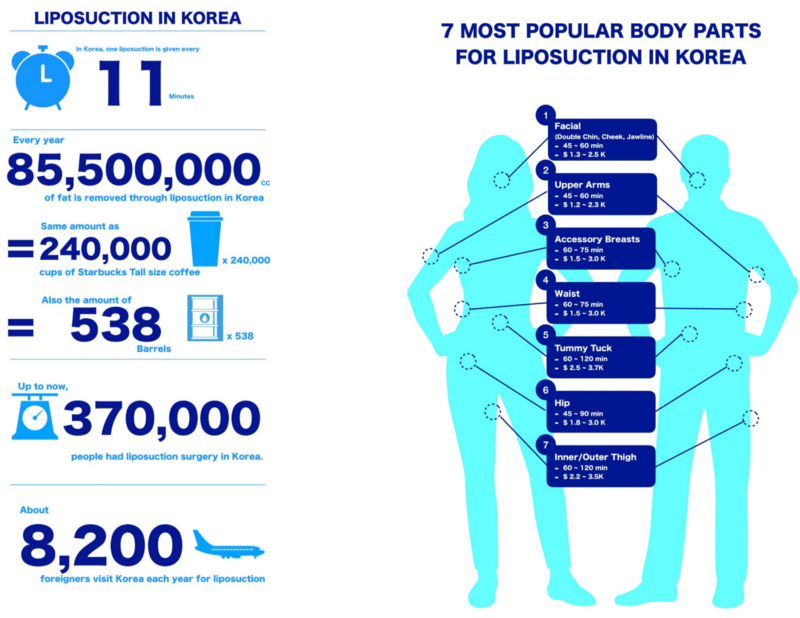
The same can be said of plastic surgery. With the highest rate (per capita) of plastic surgery in the world, walking through a neighborhood like Gangnam may make you wonder why Psy didn’t include dancing plastic surgeons in the “Gangnam Style” music video. There are over 500 clinics in Gangnam alone, with locals and foreigners going under the knife at high rates for various procedures. In 2016, about 22% of medical tourists (as in, those traveling for the purpose of undergoing medical procedures) came to Korea for the purpose of receiving cosmetic surgery (11.3%) or dermatological services (11.1%). (Source: Business Insider and International Medical Travel Journal) The infographics below, for example, show the popularity of liposuction in Korea.
Korean healthcare beyond plastic surgery
With reliable services and well-trained doctors that meet international standards, as well as cutting-edge research and innovative technology, Korea is developing a reputation as a destination for many other kinds of medical procedures, ranging from eye surgery to cancer treatments. Support from the Korean government has only strengthened the industry over the past few years, especially when it comes to improving access for foreigners.
Medical tourists outside plastic surgery
According to 2016 data from Korea’s Ministry of Health and Welfare, the majority of medical tourists came for internal medicine (20%), followed by health check-ups (8.3%), orthopedics (5.7%), general surgery (5.4%), and traditional Korean medicine (4.2%). Increasingly, foreigners have begun to come to Korea for cancer treatments as well. (Source: International Travel Medical Journal) As a recent article from The Korea Times explains, Korea’s reputation for high-quality care in cancer treatment, as well as cardiovascular disease and organ transplants, has contributed to the rise in visits for non-cosmetic procedures. (Source: The Korea Times)
Low cost of healthcare in Korea
Another benefit for both tourists and longer-term residents alike is the relatively low cost of healthcare in Korea. Though comparing the cost of Korean healthcare to healthcare in countries like the United States may seem unfair, given the high cost of medical treatments there, it is still striking that Korean healthcare procedures cost only about 20–30% on average of those in the United States. (Source: Korea Health Industry Development Institute) Even compared to other OECD countries with cheaper healthcare systems, Korea consistently ranks as the country with the cheapest cost for procedures. For example, the chart below compares the cost of appendectomy surgery (with insurance) across different countries.

Interested in healthcare in Korea?
With healthcare that’s better, more diverse, and cheaper than you may have thought, you may be wondering “What’s the catch?” after reading this. And of course, nothing is perfect, and healthcare in Korea is no different. Though many hospitals have worked to make themselves more accessible to foreigners with government support, a consistent issue is the language barrier between patients and doctors, which can make even the most routine check-up more frustrating and stressful.
That’s where we come in. At Jivaka Care, we work to connect you to these innovative and reliable services and provide you with the peace of mind knowing that you don’t have to go it alone. Our Care Planners will guide you through the process and help you navigate the language barrier, as well as any unexpected issues that may come up in the course of your experience. If you want to know more, or have any questions about our services or the healthcare system in general, please don’t hesitate to contact us. We’re here to help.
Follow us on Facebook, Twitter, and Instagram to stay up-to-date with our services and research, or check out our website.